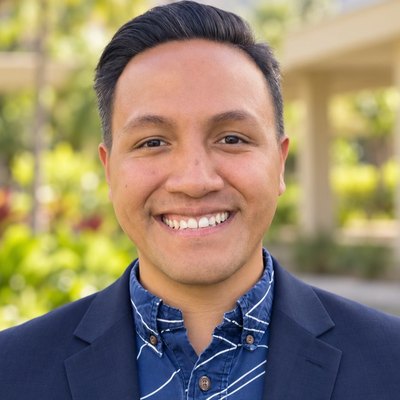
Aloha mai
I am Dayne Punahele Kealanahele, EdD, a kumu ʻōlelo Hawaiʻi and researcher. My work centers on the moʻolelo of Hawaiian language teachers and on building real proficiency in ʻōlelo Hawaiʻi. My full background is on LinkedIn.
Join my list
Get my quarterly newsletter
Four times a year: new practice materials, videos and proficiency tips for ʻōlelo Hawaiʻi.
What you will find here
Nā Moʻolelo Kumu ʻŌlelo Hawaiʻi
Doctor of Education in Professional Educational Practice, University of Hawaiʻi at Mānoa, 2026
About the study
This study shares the moʻolelo of ten veteran kumu ʻōlelo Hawaiʻi: how they learned the language, how they came to teach it, and what they hope for its future. It uses a qualitative multiple case study and narrative inquiry design, guided by Haku Mele as a culturally grounded method and by the Indigenous Empowerment Theory (Kawaiʻaeʻa et al., 2018) as the conceptual framework.
The questions
- What do veteran kumu describe as the most significant ways their ʻōlelo Hawaiʻi learning and teaching have changed over time?
- How have historical, social, and institutional forces shaped their experiences as Hawaiian language educators?
- What do these kumu envision for the future of ʻōlelo Hawaiʻi education, and what do they recommend?
What the kumu shared
Hawaiian proficiency, the ACTFL way
A plain-language look at how ACTFL describes language proficiency, and how I bring it to ʻōlelo Hawaiʻi.
What proficiency means
Proficiency is what a learner can do with the language, spontaneously, in real situations. It is not what they memorized for a test or practiced for a skit. A proficient speaker can handle a conversation they did not plan, understand something they have never seen before, and get their own message across.
The level ladder
ACTFL describes proficiency as a climb through five major levels. Novice, Intermediate and Advanced each have three sublevels: Low, Mid and High.
- 5DistinguishedNegotiates, persuades and tailors language to many different audiences.
- 4SuperiorSupports opinions, hypothesizes and discusses abstract topics in multi-paragraph speech.
- 3AdvancedNarrates and describes in past, present and future in connected paragraphs.LowMidHigh
- 2IntermediateCreates with language in sentences, asks and answers simple questions on familiar topics.LowMidHigh
- 1NoviceUses memorized words, lists and phrases to share basic personal information.LowMidHigh
Level summaries paraphrase the ACTFL Proficiency Guidelines 2024.
Three modes of communication
Two-way
InterpersonalBack-and-forth conversation, spoken or written, where people negotiate meaning, ask for clarification and adjust as they go.Taking in
InterpretiveUnderstanding and interpreting what is heard, read or viewed, with no chance to ask the author or speaker what they meant.Putting out
PresentationalCreating a message for an audience, such as a speech, story, poster or video, prepared so others can understand it without help.Mode descriptions follow the NCSSFL-ACTFL Can-Do Statements.
How I apply it to ʻōlelo Hawaiʻi
Writing
Articles and chapters, current and upcoming.
Forthcoming.
Practice materials by proficiency level
Practice sets for ʻōlelo Hawaiʻi learners, sorted by ACTFL level. Pick your level and get practicing.
Practice with me
Short practice videos in ʻōlelo Hawaiʻi, one proficiency level at a time. Watch, pause, answer out loud.
The first videos are coming soon on YouTube and Instagram.
Contact
I would love to hear from you.
Get in touch
The best way to reach me for now is a message on LinkedIn.
Find me online
LinkedIn · Instagram and YouTube coming soon
Join my list
Get my quarterly newsletter
Four times a year: new practice materials, videos and proficiency tips for ʻōlelo Hawaiʻi.
Past issues
- The first issue is coming soon.